
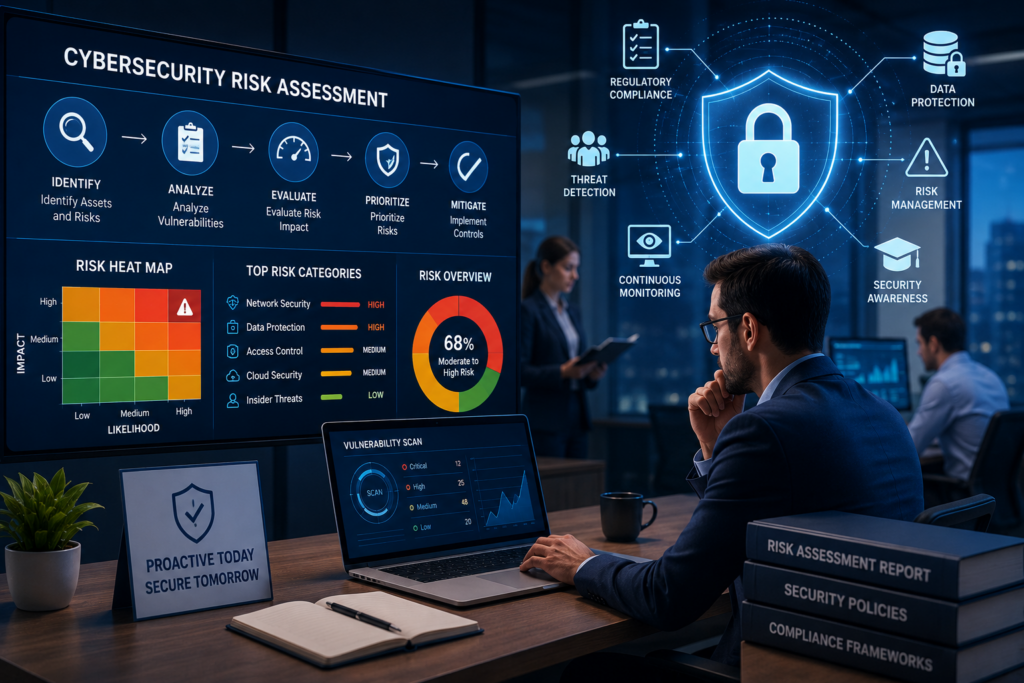
The Importance of Consistent Cyber Security Risk Assessment
Today, businesses of all sizes face ransomware attacks, phishing campaigns, data breaches, insider threats, and system vulnerabilities. With digital transformation accelerating across industries, organizations rely more heavily on cloud platforms, remote access systems, and interconnected technologies, expanding their potential attack surface.
For business owners, cybersecurity is no longer just a technical concern; it is a business risk issue. A single breach can result in financial loss, reputational damage, regulatory penalties, and operational disruption. To manage this risk effectively, organizations must move from reactive responses to proactive prevention. One of the most effective strategies for doing so is conducting regularly scheduled cybersecurity risk assessments.
What Is a Cybersecurity Risk Assessment?
A cybersecurity risk assessment is a systematic process used to identify, evaluate, and prioritize potential security risks within an organization’s IT environment. The goal is to understand:
- What digital assets need protection (data, systems, networks)
- What vulnerabilities exist
- What threats could exploit those vulnerabilities
- What impact could a successful attack have on operations
Risk assessments analyze infrastructure, policies, user behavior, access controls, software configurations, and third-party integrations. They provide a clear picture of the organization’s current security posture and highlight areas that require immediate attention.
Many organizations partner with an experienced IT consulting company or provider of cybersecurity services to conduct these assessments professionally. Experts use structured methodologies, vulnerability scanning tools, and compliance frameworks to ensure comprehensive evaluation.
Why Regularly Scheduled Assessments Matter
Cybersecurity is not a one-time task. Technology environments constantly change when new employees join, systems are updated, software patches are applied, and new tools are introduced. Every change can create new vulnerabilities.
Regularly scheduled cybersecurity risk assessments are essential because:
Threats Evolve Continuously
Cybercriminals constantly develop new attack methods. A risk assessment conducted a year ago may not account for today’s threats. Scheduled reviews help organizations stay ahead of emerging risks.
Business Environments Change
Cloud migrations, remote workforce expansion, and digital integrations alter risk exposure. Routine assessments ensure security strategies align with operational changes.
Compliance Requirements Demand Ongoing Monitoring
Many industries must comply with regulatory frameworks such as GDPR, HIPAA, ISO standards, or industry-specific security mandates. Regular assessments help demonstrate due diligence and maintain compliance.
Security Investments Are Better Aligned
Risk assessments help leadership allocate budgets effectively. Instead of guessing where to invest, organizations can prioritize security improvements based on real risk data.
Vulnerabilities Are Identified Before Exploitation
Proactive detection prevents attackers from exploiting weaknesses. Early identification significantly reduces remediation costs and potential downtime.
When organizations integrate risk assessments into their broader IT services strategy, security becomes part of ongoing operational excellence—not an afterthought.
Consequences of Skipping Cybersecurity Risk Assessments
Failing to conduct regular risk assessments can expose organizations to serious consequences:
Financial Loss
Ransomware payments, legal costs, regulatory fines, and customer compensation can severely impact revenue.
Operational Disruption
System outages and data loss can halt productivity for days or even weeks.
Reputational Damage
Clients and business partners may lose trust in a company that fails to protect sensitive information.
Regulatory Penalties
Non-compliance with industry standards can result in substantial fines and legal action.
Hidden Vulnerabilities
Without regular evaluation, small vulnerabilities can accumulate over time, creating significant exposure.
Skipping assessments may save short-term costs, but often leads to long-term financial and operational damage.
Role of Professional IT Services and Security Experts
While internal IT teams play a critical role in maintaining daily operations, cybersecurity risk assessments often require specialized expertise. Professional IT services providers bring:
- Advanced security tools and methodologies
- Experience across multiple industries
- Knowledge of evolving threat landscapes
- Compliance expertise
- Objective, third-party evaluation
Partnering with a trusted IT consulting company ensures that assessments are thorough and unbiased. Security experts can also provide actionable remediation plans, helping organizations move from risk identification to risk mitigation.
Additionally, comprehensive cybersecurity services often include continuous monitoring, incident response planning, and employee awareness training—strengthening overall protection beyond just assessment.
Business Benefits Beyond Security
Regular cybersecurity risk assessments offer strategic business advantages beyond technical protection.
Improved Business Continuity
By identifying potential system weaknesses, organizations can prevent disruptions and maintain consistent operations.
Stronger Customer Trust
Demonstrating proactive security practices reassures clients and stakeholders that their data is protected.
Competitive Advantage
Companies with strong cybersecurity frameworks are more attractive to investors, partners, and enterprise clients.
Better Decision-Making
Risk assessments provide leadership with measurable data to guide technology investments and strategic planning.
Enhanced Organizational Awareness
Assessments often uncover gaps in employee training or internal processes, encouraging stronger security culture across departments.
In essence, cybersecurity risk assessments contribute to long-term operational resilience and strategic growth.
Conclusion: Proactive Security for Long-Term Resilience
In today’s rapidly evolving digital environment, cybersecurity risk assessments are not optional, they are foundational. Regularly scheduled assessments help organizations identify vulnerabilities, reduce exposure to cyber threats, and align security strategies with business priorities.
By working with experienced providers of IT services and cybersecurity services, businesses gain clarity, control, and confidence in their security posture. Partnering with a knowledgeable IT consulting company ensures that assessments are structured, thorough, and aligned with industry best practices.
👉Partner with Microsan Consulting for expert-led cybersecurity risk assessments and proactive IT security solutions tailored to your organization.